Bromine vs Chlorine for Hot Tubs: Which Should You Use?
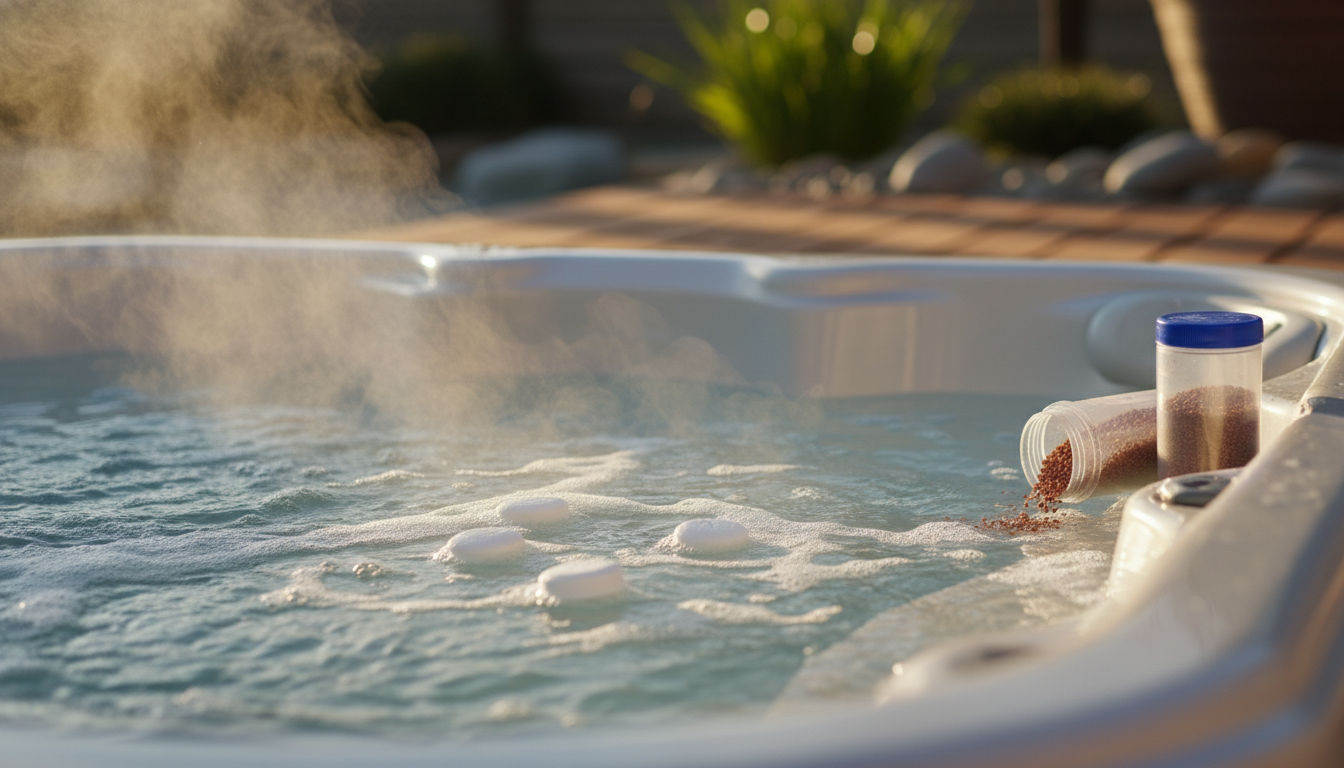
Most hot tub owners settle on a sanitizer without fully understanding the tradeoffs. The short answer: bromine is the better default choice for hot tubs, but chlorine has a legitimate place if budget or specific conditions push you that way.
Why Hot Tubs Are Different From Pools
Temperature changes everything. Hot tubs run at 100–104°F, and that heat accelerates chemical reactions, degrades sanitizers faster, and makes bather load per gallon far more intense than a pool. A typical 400-gallon hot tub with two bathers has a much higher contaminant load per unit of water than a 15,000-gallon pool with the same two people.
Chlorine, while excellent in pools, off-gasses quickly at high temperatures. You’ll burn through it fast, and the resulting chloramines — the byproduct of chlorine reacting with sweat, oils, and urine — create that sharp, eye-irritating smell most people mistakenly call “too much chlorine.” It’s actually the opposite.
The Case for Bromine
Bromine is more stable in hot water. It doesn’t off-gas at the same rate chlorine does, which means it stays active longer between doses. More importantly, spent bromine (bromamines) still sanitizes — unlike chloramines, which are essentially dead weight that irritates skin and eyes.
The pH sweet spot for bromine (7.0–7.6) also aligns naturally with how hot tub water tends to drift. Chlorine requires tighter pH management because its effectiveness drops sharply above pH 7.8, and hot tubs often push alkalinity and pH upward through aeration and off-gassing CO₂.
Bromine also reactivates. When you shock a bromine-treated hot tub with a non-chlorine oxidizer like potassium monopersulfate (MPS), spent bromide ions convert back into active bromine. You’re essentially recycling your sanitizer. With chlorine, shocking just replenishes what’s been consumed.
Typical bromine setup:
- Establish a bromide bank with sodium bromide (e.g., SpaGuard Brominating Concentrate or Leisure Time Renew)
- Use a floating bromine tablet feeder with 1-inch tablets (BioGuard or Spa Selections both work)
- Shock weekly with MPS or non-chlorine shock
- Maintain 3–5 ppm bromine, pH 7.2–7.6
The Case for Chlorine
Chlorine is cheaper and more available. Trichlor tablets and granular dichlor sodium are sold at every hardware store, and the upfront cost is noticeably lower than bromine. For tight budgets or seasonal-use tubs that aren’t running year-round, chlorine is a reasonable choice.
Dichlor (dichloroisocyanuric acid) is the most practical chlorine form for hot tubs. It’s pH-neutral, dissolves cleanly, and doesn’t require a tablet feeder — just broadcast granules directly after each use. The workflow fits a simple routine: dose after every soak, test before you get in.
The catch with dichlor is cyanuric acid (CYA) buildup. Dichlor carries a stabilizer (CYA) that accumulates over time and eventually over-stabilizes the water, making your chlorine ineffective even at high readings. Once CYA climbs past 30–50 ppm in a hot tub, the only fix is a partial drain and refill. If you’re diligent about regular water changes (every 3–4 months), this stays manageable.
Trichlor tablets are generally not recommended for hot tubs. They’re highly acidic (pH ~2.8), will crater your water balance, and can bleach or damage surfaces inside a floating feeder left sitting on the shell.
Skin Sensitivity and Odor
This is where bromine wins most decisively for daily or frequent users. Bromamines are far less irritating to skin and eyes than chloramines. People who find chlorinated hot tubs itchy or “chemical-smelling” often switch to bromine and notice immediate improvement.
That said, some people are genuinely sensitive to bromine itself — not common, but real. If someone in your household has a known bromine sensitivity, chlorine with rigorous shocking protocol is the better path.
Odor with bromine is minimal when the water is balanced. A well-maintained bromine tub has almost no smell. A chlorine tub that isn’t shocked frequently will develop that familiar eye-burning odor from chloramine buildup.
Cost and Maintenance Effort
Bromine costs more upfront and per dose. Expect to pay roughly 20–40% more than an equivalent chlorine regimen, depending on brand and retailer. The trade-off is a more forgiving system — bromine tolerates minor pH swings and infrequent dosing better than chlorine.
Chlorine is cheaper but demands more precise testing and dosing frequency. Let chlorine lapse for a few days in a hot tub and you’ll likely deal with cloudy water or biofilm. Bromine holds its protective residual longer.
Quick decision guide:
- Choose bromine if you use the tub 3+ times per week, have sensitive skin, or want a lower-maintenance routine.
- Choose chlorine (dichlor) if you use the tub occasionally, want to minimize chemical costs, or are filling for a single season.
- Avoid trichlor tablets in any hot tub, full stop.
Water Changes Still Matter
No sanitizer substitutes for regular water replacement. Dissolved solids, CYA (if using chlorine), and organic waste accumulate regardless of which system you run. Drain and refill every 3–4 months using the formula: tub gallons ÷ 3 ÷ average daily bathers = days between refills.
Test at least twice a week during heavy use. A basic 4-way or 6-way test strip (Taylor or LaMotte) tells you sanitizer level, pH, total alkalinity, and hardness at a glance.
Bottom line: For most hot tub owners, bromine is the right choice — more stable in hot water, easier on skin, and more forgiving day to day. Chlorine works, but it demands more attention to earn the same results.