Salt Water vs. Chlorine Pools: Which Is Right for You?
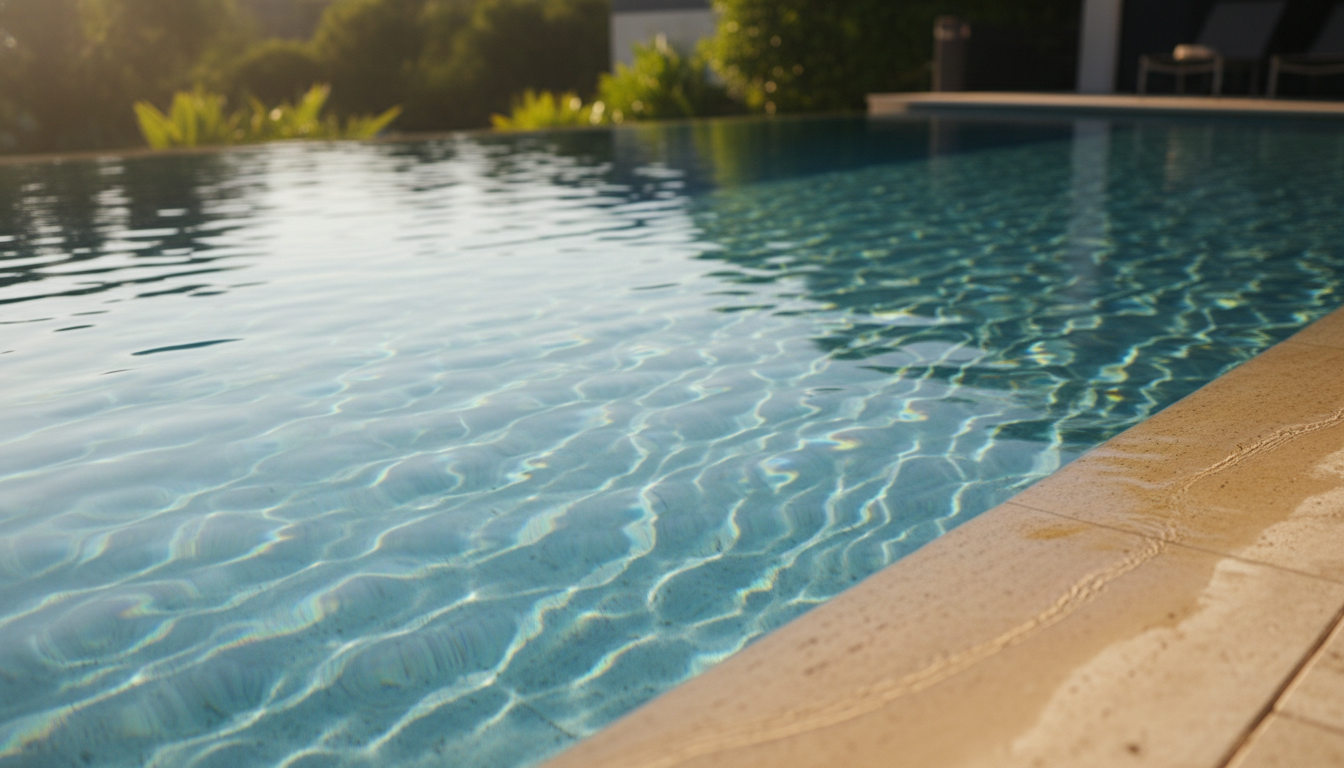
Salt water pools are not chlorine-free — that’s the most persistent myth in pool ownership. Both systems sanitize with chlorine; the difference is how that chlorine gets delivered. Here’s what that means for your wallet, your maintenance routine, and your skin.
What “Salt Water Pool” Actually Means
A salt water pool uses a salt chlorine generator (SCG) — brands like Pentair IntelliChlor, Hayward AquaRite, or Jandy TruClear are the market leaders. You dissolve pool-grade salt (sodium chloride) in the water at roughly 2,700–3,200 ppm, and the SCG’s electrolytic cell splits that salt into hypochlorous acid — the same sanitizer you’d buy in a bucket of granular chlorine or a tablet.
The cell does this continuously while the pump runs, so you’re producing chlorine on demand rather than dosing manually. The salt isn’t consumed in this process; it cycles back. You only replace it when you drain water or after heavy rain dilution.
This matters for the comparison: you’re not choosing between chlorine and no-chlorine. You’re choosing between automated chlorine production and manual chlorine addition.
Upfront and Ongoing Costs
A quality salt chlorine generator runs $600–$1,500 for the unit alone (installed costs typically land between $1,000–$2,500 depending on labor and pool size). The electrolytic cell — the part that wears out — needs replacement every 3–7 years and costs $200–$700 depending on capacity.
Traditional chlorine pools have near-zero upfront equipment cost if you’re starting from a standard setup. But you’re buying chlorine constantly: trichlor tablets (3-inch tabs) typically run $80–$150 for a 25 lb bucket, and a mid-size pool might go through several buckets per season. Liquid chlorine (sodium hypochlorite) is cheaper per unit of available chlorine but requires more frequent trips to the store or delivery.
Rough break-even point: Most pool owners recoup the SCG investment in 2–4 years of saved chlorine costs, assuming consistent manual dosing in the traditional system. Pools in high-sun climates with long swim seasons tend to break even faster.
One cost that often surprises salt pool owners: cyanuric acid management. Traditional trichlor tablets are stabilized — they automatically add CYA. A salt pool using unstabilized chlorine needs CYA added separately and monitored carefully, since the SCG doesn’t provide any.
Water Feel and Chemistry
This is where salt pools genuinely win. The water feels softer and less harsh on eyes and skin. Some of that is the low salt concentration (roughly one-tenth the salinity of ocean water — you can taste it if you’re looking for it, but it’s subtle). Some of it is that salt pools tend to run at lower free chlorine levels (2–4 ppm is typical) with more stable chemistry because the generator produces steadily rather than in spikes.
Traditional pools, especially those dosed with tablets or shock on a weekend schedule, often see chlorine swings — high right after dosing, low by the end of the week. Those peaks are what cause the “pool smell” (actually chloramines from combined chlorine) and the eye irritation that most people wrongly attribute to chlorine itself.
If your traditional pool is well-managed — tested twice a week, dosed precisely — the water quality difference shrinks considerably. The salt pool advantage is partly that automation makes consistent chemistry easier to achieve.
Maintenance: What Gets Simpler, What Doesn’t
Salt pools reduce the frequency of chlorine purchases and manual dosing. That’s real. But they don’t reduce pool maintenance overall.
What you still have to manage:
- pH drifts high in salt pools (the chlorination process raises pH), so acid additions are actually more frequent than in many traditional pools
- Stabilizer (CYA) needs to be checked and adjusted seasonally
- Salt level needs testing monthly and after rain events
- Cell cleaning — calcium scale builds up on the electrolytic cell; most manufacturers recommend inspecting it every 3 months and cleaning with dilute muriatic acid as needed
- Total alkalinity, calcium hardness, phosphates — same as any pool
The Hayward AquaRite and Pentair IntelliChlor both have self-cleaning modes that reverse polarity to reduce scale, which helps, but doesn’t eliminate manual cell inspection.
What Can Go Wrong
Salt water is corrosive at higher concentrations. At the recommended 3,200 ppm it’s mild, but salt pools are harder on certain materials: heaters with copper heat exchangers can corrode prematurely, natural stone coping and decking can be affected over years, and some older pool equipment wasn’t designed with salt exposure in mind. If you’re retrofitting an existing pool, check manufacturer specs before installing an SCG.
The SCG itself can give false chlorine readings if the cell is scaling or failing. Owners who rely solely on the “output” display without testing actual free chlorine levels sometimes end up with an under-sanitized pool. Always verify with a reliable test kit — the Taylor K-2006C or a Lamotte ColorQ are the standards here.
Which System Makes Sense
Choose a salt chlorine generator if: you have a new build or already need to replace pool equipment, you swim frequently (the automation payoff increases with usage), and you want a lower-effort day-to-day routine.
Stick with traditional chlorine if: you have an older pool with equipment not rated for salt, you’re on a tight upfront budget, or you already have a disciplined testing and dosing routine that keeps your water consistently balanced.
Bottom line: Salt water pools earn their reputation for comfort and convenience, but they’re not magic — they’re still chlorine pools with an automated delivery system. The right choice depends on your budget, your pool’s existing infrastructure, and how much you want chemistry to run in the background versus require your attention.