Fiberglass Pool Cost: What You'll Actually Pay in 2026
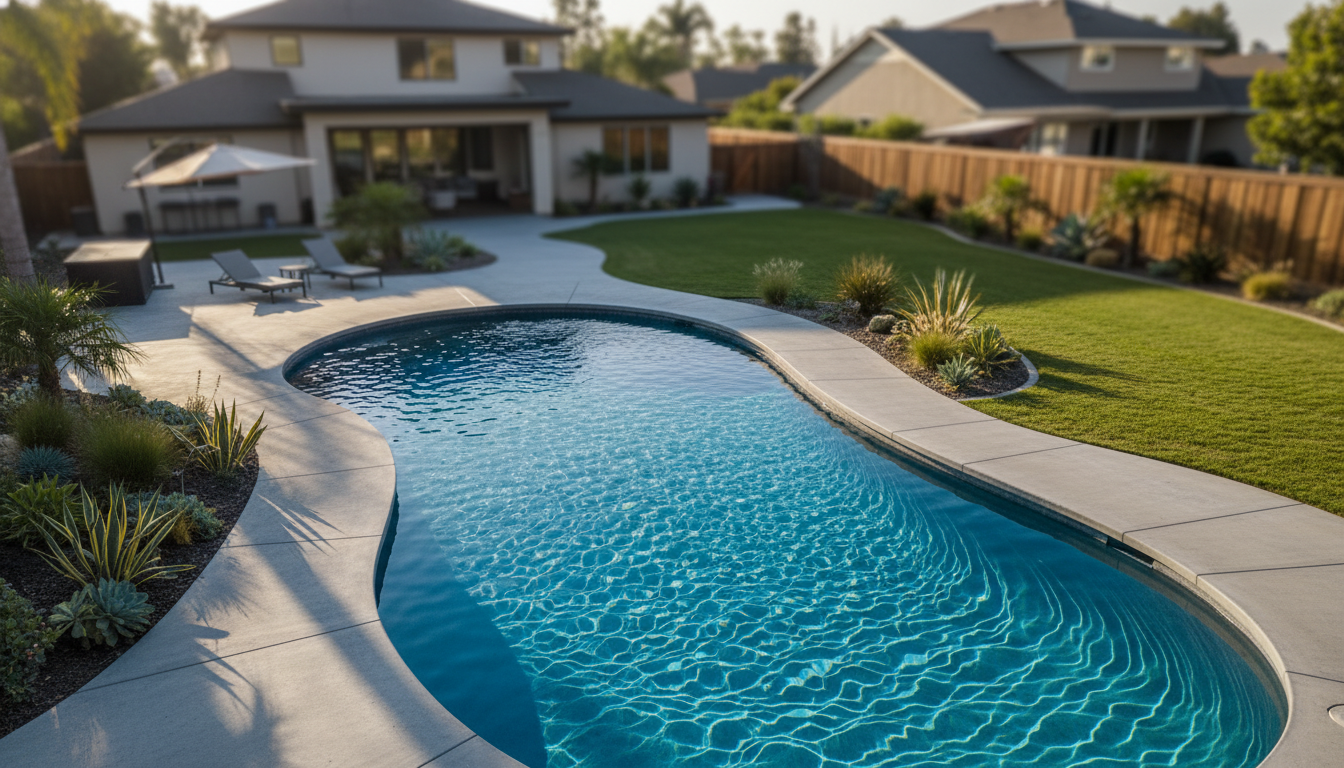
Most homeowners researching fiberglass pools see a wide price range and can’t figure out where they’ll land. The short answer: a fully installed fiberglass pool typically costs between $45,000 and $85,000, with complex projects pushing past $100,000. Where you fall depends on shell size, site conditions, and how much work goes into the surrounding area.
The Shell Itself Is Only Part of the Price
Fiberglass pool shells are manufactured off-site and dropped into an excavated hole — that’s the core appeal. A small plunge pool shell (12×24 ft) might run $10,000–$15,000 from the manufacturer. A larger freeform or rectangular shell at 16×40 ft can reach $20,000–$30,000 before anyone touches your yard.
But the shell price is almost beside the point. Installation — excavation, backfill, plumbing, electrical, coping, and decking — typically costs as much as or more than the shell itself. Budget the shell as roughly 30–40% of your total installed cost.
What Installation Actually Covers
When a fiberglass pool contractor quotes you a number, confirm exactly what’s included. The line items that eat budgets:
- Excavation and crane rental: Fiberglass shells require a crane or large boom truck to set. Tight access (narrow gates, overhead wires) adds cost.
- Plumbing and equipment pad: Variable-speed pump, filter, heater rough-in, and return lines. A quality equipment package from Pentair or Hayward runs $3,000–$6,000 on its own.
- Electrical: GFCI circuits, bonding, and sub-panel work. Expect $1,500–$4,000 depending on distance from your main panel.
- Backfill material: Sand or flowable fill around the shell prevents shifting. This isn’t optional and varies by region.
- Coping and decking: Concrete, pavers, or travertine around the pool edge. Decking alone can run $8,000–$20,000+ depending on material and square footage.
A “complete” quote that omits decking or electrical is not complete.
How Pool Size and Shape Affect Price
Fiberglass pools come in fixed manufacturer molds, which is actually useful for budgeting — you’re choosing from a catalog, not custom-designing from scratch. Brands like Latham, Thursday Pools, and San Juan offer dozens of shapes and depths.
Smaller pools (under 30 ft) typically land in the $45,000–$60,000 installed range. Mid-size pools in the 35–40 ft range run $60,000–$80,000. Larger or more feature-rich shells — tanning ledges, beach entries, deep ends over 8 ft — push pricing toward $85,000–$100,000+.
Depth matters more than length for excavation cost. A 6-ft deep end is standard. Go to 8 ft and you’re moving significantly more dirt, which affects both excavation time and haul-away fees.
Add-Ons That Move the Number Fast
The base pool price doesn’t include everything most homeowners want. Common additions and approximate costs:
- Salt chlorine generator: $800–$2,500 installed (Hayward AquaRite, Pentair IntelliChlor are common choices)
- Automatic pool cover: $5,000–$12,000 depending on mechanism and track style
- Heat pump: $3,500–$7,000 installed; gas heaters run slightly less upfront but cost more to operate
- LED lighting: $500–$1,500 per light installed
- Water features (scuppers, deck jets, waterfalls): $500–$3,000 each
- Fence or barrier (often code-required): $2,000–$8,000
It’s common for a $58,000 base quote to land at $72,000 once a homeowner adds a heat pump, salt system, cover, and code-required fence. Know your add-ons before you sign.
Regional Price Variation
Labor rates, permit fees, and soil conditions vary significantly by location. Florida and the Southeast generally offer competitive pricing because high demand supports more pool contractors and easier digging. The Northeast and Pacific Northwest tend to run higher — rockier soil, shorter installation seasons, and steeper labor costs.
Permits add $500–$3,000 depending on your municipality and whether your project triggers additional inspections. Never work with a contractor who suggests skipping permits. It creates title problems when you sell and voids most manufacturer warranties.
Fiberglass vs. Gunite on Cost
Fiberglass installs faster (2–4 weeks vs. 3–6 months for gunite) and has lower long-term maintenance costs because the smooth gel coat surface resists algae and doesn’t require replastering. Gunite pools cost roughly $60,000–$120,000+ installed and need replastering every 10–15 years at $10,000–$20,000 a pop.
Over a 20-year window, a fiberglass pool almost always wins on total cost of ownership. The upfront number is competitive; the backend savings are where fiberglass earns its reputation.
How to Get an Accurate Quote
Get at least three quotes from licensed, insured contractors who install a specific brand of shell — not generic resellers. Ask each contractor to itemize: shell cost, excavation, equipment, electrical, coping, decking, and permits as separate line items.
Ask what’s explicitly excluded. Ask whether the quote is fixed-price or subject to change based on soil conditions. Reputable contractors will answer both questions clearly.
Bottom line: Plan on $55,000–$75,000 for a realistic mid-size fiberglass pool with a decent equipment package and basic decking. That number moves up quickly if your site is difficult or your add-on list is long — and it almost never moves down.