How Much Does a Hot Tub Cost to Run in Winter?
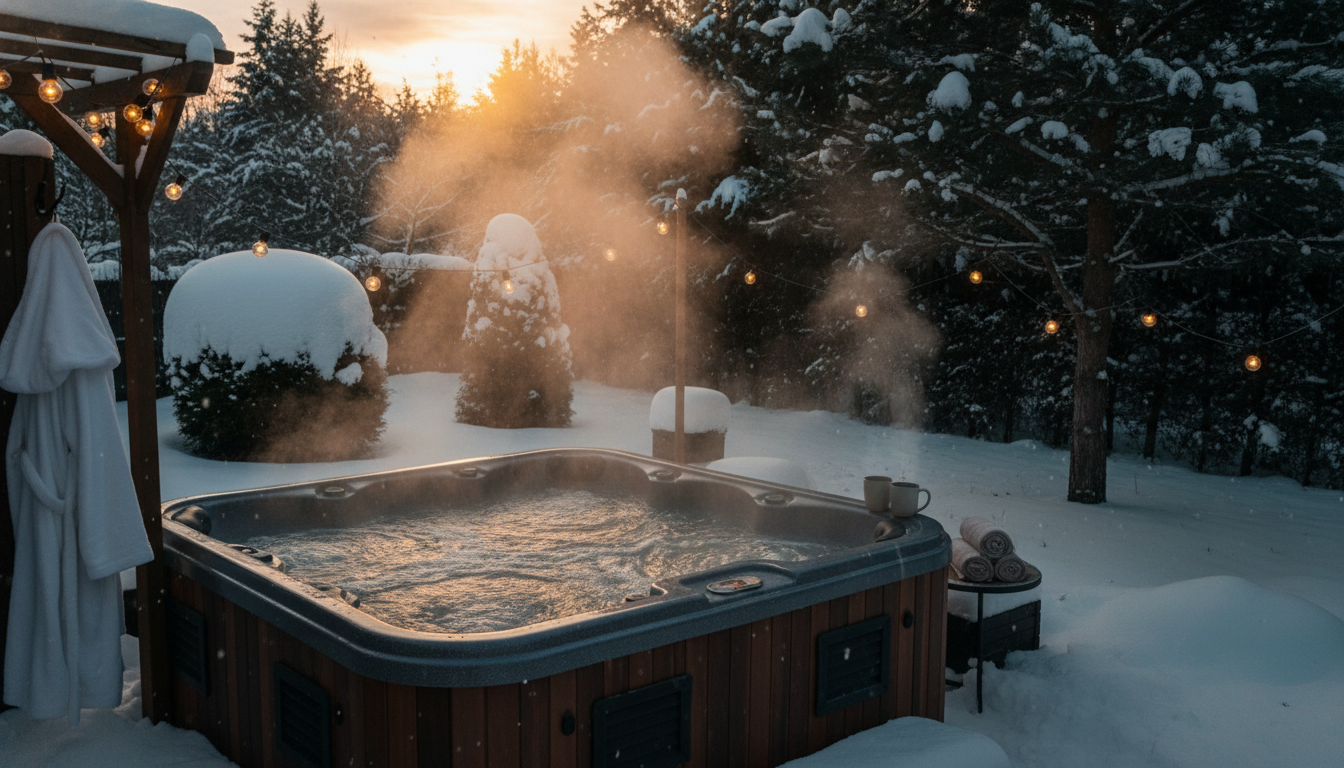
The short answer: expect to pay $50–$150 per month extra on your electricity bill to run a hot tub through winter, depending on your climate, tub size, and how well it’s insulated. That’s a wide range, and the gap between the low and high end comes down to a handful of controllable factors.
What Actually Drives the Cost
A hot tub in winter is fighting a constant heat-loss battle. The water wants to cool down to ambient temperature. Your heater runs to stop that from happening. The colder it gets outside, the harder the heater works.
Most residential hot tubs run a 1.5 kW to 6 kW heater. At an average U.S. Electricity rate of around $0.15–$0.17 per kWh (2025 national average), a 6 kW heater running 4 hours a day costs roughly $1.50 per day, or $45 per month. But in a cold climate (think Minnesota in January), the heater may run 8+ hours a day. That same tub could cost $90–$120 per month in electricity alone, before you factor in the pump running continuously.
The pump is the other piece. Most hot tubs run a circulation pump 24/7 to keep water moving through the filter and heater. That pump is usually 50-300 watts. Small, but it adds up over a month.
Insulation Is the Biggest Variable
A cheap hot tub and a premium hot tub can sit side by side in identical weather, and the electricity bills will look completely different. Full-foam insulation (where the entire cabinet cavity is filled with spray foam) dramatically reduces heat loss compared to perimeter-only or partial-foam designs.
Bullfrog Spas and Hot Spring Spas consistently rank at the top of owner reports for winter efficiency, partly because of their insulation design. Buyers on TrustedHotTubs.com and Trouble-Free Pool forums repeatedly note that well-insulated tubs in cold climates run only a few degrees harder than the same tub in mild weather.
If the tub is older (pre-2010 or so) with perimeter foam only, winter costs will skew toward the high end of any estimate.
The Cover Matters More Than Most People Realize
A quality cover does more thermal work than the insulation in the cabinet. Hot tubs lose most of their heat through the top surface. A 4-inch tapered cover with a high-density foam core holds heat dramatically better than a worn, waterlogged cover that’s been sitting in the sun for five years.
The Prestige 5-inch Tapered Hot Tub Cover is a well-regarded replacement option that owner reviews on Amazon and Spa Depot consistently call a solid performer in cold climates. A good cover pays for itself in a single winter season for most people in northern states.
If the cover feels heavy or has soft spots, it’s absorbed water and lost most of its insulation value. Replace it.
Set Point Temperature and Usage Frequency
Keeping a hot tub at 104°F costs more than keeping it at 100°F. That 4-degree difference is small to the bather but meaningful to the heater over 90 days of winter. Community feedback on forums like SpaSearch.org suggests dialing back to 101°F during weeks you’re not using the tub frequently can cut monthly costs by 10-15%.
Some owners try the “cool down and reheat” strategy, dropping the tub to 85°F when it won’t be used for several days. This almost never saves money. Reheating from 85°F to 104°F in cold weather costs more electricity than simply maintaining temperature. The math consistently works against the strategy.
Use the tub often if you’re going to run it. Otherwise, consider a proper winterization (draining and closing) if you know you won’t use it for a month or more.
Smart Controls and Economy Mode
Most hot tubs built after 2015 have an economy or sleep mode that holds temperature at a lower set point during off-peak hours, then ramps back up before a scheduled soak. Balboa Water Group controls (found in a huge number of branded spas) let you set these schedules easily.
The Balboa BP Series Control System is the most common upgrade path for older tubs that lack scheduling. Owner reports across spa dealer forums note meaningful savings once the schedule is dialed in to match actual usage patterns.
If your utility offers time-of-use rates, running the heater during off-peak hours (usually late night) can shave another $10–$25 per month off the bill.
Quick Reference: Monthly Winter Cost by Scenario
- Mild climate (40°F average), well-insulated tub: $30–$60/month
- Cold climate (20°F average), well-insulated tub: $75–$120/month
- Cold climate, poorly insulated or old tub: $120–$200+/month
- Any climate, waterlogged cover, no scheduling: add $30–$50 to any estimate
A well-maintained, properly covered hot tub in a cold climate can realistically run for $80–$100/month. That’s the realistic target to aim for if you’re optimizing.
Bottom line: The biggest levers are insulation quality, cover condition, and set-point temperature. Fix those three and winter running costs become predictable, and for most owners, genuinely reasonable.