How Much Does It Cost to Run a Hot Tub?
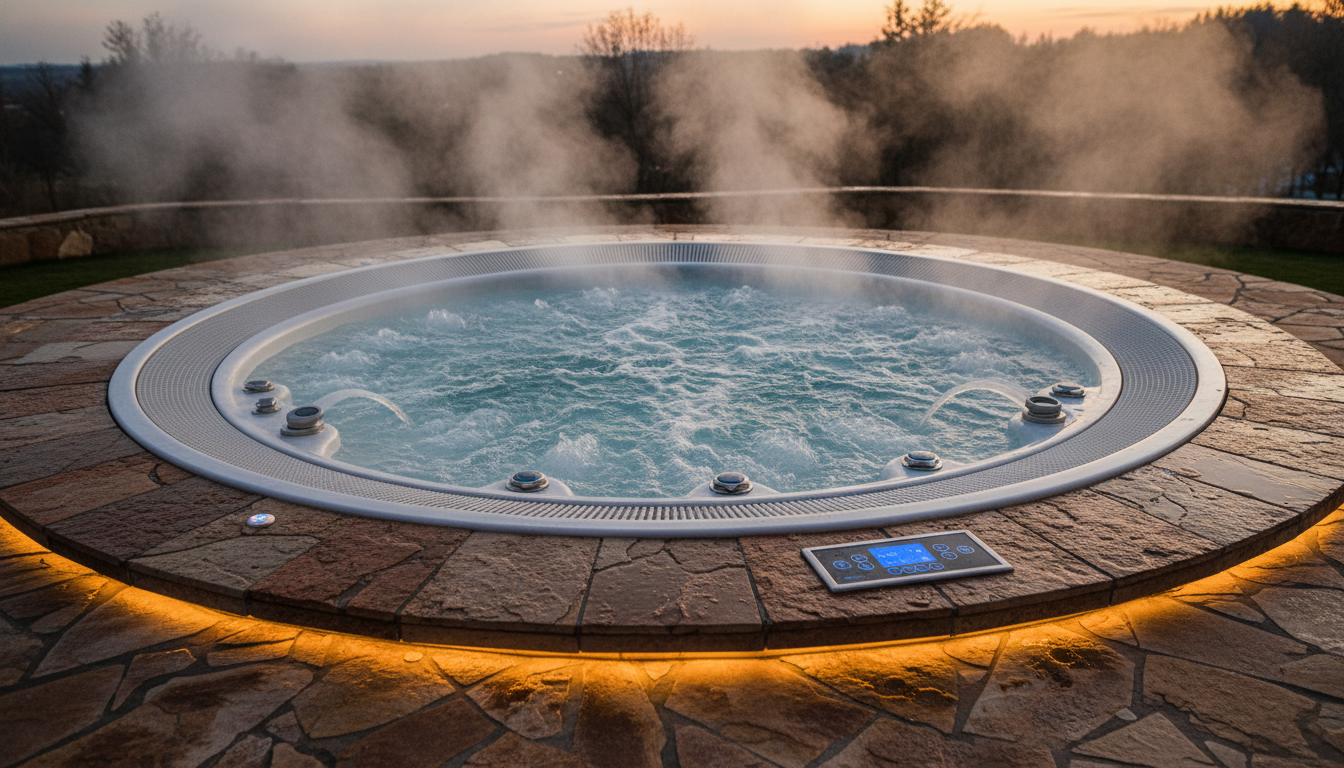
Monthly hot tub operating costs vary widely, but most owners land somewhere between $20 and $75 per month depending on climate, usage habits, and equipment efficiency. A few variables move that number dramatically in either direction, and knowing them lets you make smarter decisions before and after buying.
The Base Numbers
Electricity is the dominant cost. A typical hot tub runs a 2-4 kW heater and a 1-2 HP pump. At the U.S. Average residential rate of roughly $0.16 per kWh (as of 2025 data), a mid-size 400-gallon spa used 3-4 times per week will draw $30–$50 per month in mild climates.
Colder climates push that up fast. In Minnesota winters, owners on forums like TFP (Trouble Free Pool) routinely report $80–$100 monthly bills for the same tub that costs $30 to run in Florida. The heater cycles more often. That’s the whole story.
Chemicals are a secondary but real cost. Budget $20–$40 per month for a standard bromine or chlorine regimen, including test strips or a decent test kit, sanitizer, and pH adjusters. Skimping here causes water problems that cost more to fix than to prevent.
What Drives the Bill Up
Insulation quality is the biggest lever. Older or budget hot tubs with thin foam insulation lose heat quickly, and the heater runs nearly constantly in cool weather. Full-foam models from brands like Bullfrog or Hot Spring hold heat significantly better than partial-foam competitors.
Cover condition matters more than most owners expect. A waterlogged or cracked cover can account for 50% of heat loss on its own. If the cover feels heavy when you lift it, it’s absorbing water and insulating poorly. Replacing it usually pays back in 6-12 months of reduced heating costs.
Pump runtime also adds up. Running jets for an hour daily costs more than running them 20 minutes. Most modern tubs have programmable filtration cycles; setting those to off-peak hours (nights, early mornings) can reduce electricity costs by 10-20% in areas with time-of-use utility pricing.
What Keeps the Bill Down
A high-efficiency hot tub makes a real difference. The Caldera Spas Niagara and similar well-insulated models from the top tier of the market consume 30-40% less electricity than builder-grade tubs, according to manufacturer specs and verified energy audits third parties have published.
A quality thermal cover is non-negotiable. The Prestige 5” Tapered Hot Tub Cover runs around $200–$350 depending on size and consistently gets strong feedback for heat retention relative to price. That’s a small cost against months of heating savings.
Keeping the water temperature lower when the tub isn’t in use helps too. Dropping from 104°F to 98°F during a week-long vacation cuts heating energy noticeably. Most modern tubs have an “economy mode” that does this automatically.
Chemical Costs in Detail
This part gets ignored in most running-cost estimates, but it adds up. The basic monthly spend looks roughly like this:
- Bromine tabs or chlorine granules: $10–$20
- pH Up / pH Down: $5–$10
- Alkalinity increaser (sodium bicarbonate): $3–$8
- Shock (MPS or dichlor): $5–$10
- Test strips or liquid reagents: $5–$10
A reliable test kit saves money over time. The Taylor K-1766 is the standard recommendation in the hot tub community for bromine testing. Accurate testing means you dose correctly instead of over-correcting, which wastes chemicals.
Saltwater systems (like those using the Watkins FreshWater Salt System) reduce ongoing chemical purchases but require a larger upfront investment and periodic cell replacement (roughly every 1-2 years). For frequent users, the math usually favors salt after the second year.
Water and Maintenance
Water itself is cheap. Filling a 400-gallon hot tub costs about $2–$4 at municipal water rates, and most owners drain and refill every 3-4 months. That’s maybe $12–$15 per year.
The drain-and-refill schedule directly affects chemical consumption. Old water with high TDS (total dissolved solids) is harder to balance and consumes more chemicals to keep clear. Sticking to a regular refill schedule keeps chemistry simple and cheap.
A line flush product like Ahh-Some Hot Tub Cleaner run through the plumbing before each drain removes biofilm buildup that would otherwise recontaminate fresh water immediately. It costs about $15 a bottle and one bottle lasts several refill cycles.
Annual Cost Summary
Adding it all up, here’s a realistic annual range:
- Low end (~$400–$600/year): Energy-efficient tub, mild climate, disciplined chemical use, good cover.
- Mid range (~$700–$1,200/year): Average-efficiency tub, moderate climate, standard maintenance.
- High end (~$1,500+/year): Older or poorly insulated tub, cold climate, heavy use, reactive (rather than preventive) chemical management.
The spread between low and high end is largely a maintenance and equipment quality story, not a luck story. Most owners who hit the high end are running an old cover or a tub with compromised insulation without realizing it.
Bottom line: Plan for $50–$80 per month as a realistic starting budget for a mid-range tub in a moderate climate. Get a quality cover, test your water consistently, and insulation quality will do the rest of the heavy lifting on your utility bill.
Where to buy
- Caldera Spas Niagara
- Prestige 5” Tapered Hot Tub Cover
- Taylor K-1766 Test Kit
- Watkins FreshWater Salt System
- Ahh-Some Hot Tub Cleaner